
6 Emergency Roof Repair Tips To Prevent More Damage
Fast emergency roof repair is the difference between a $500 tarp job and a $30,000 water damage claim, especially in the hours immediately after a storm exposes your home’s interior to the weather. Coastal Delaware homes face regular wind, hail, and nor’easter damage that can pull shingles, split flashing, and puncture decking in ways that let water pour into the attic within minutes. This guide walks homeowners in Middletown and surrounding areas through the six most important emergency roof repair steps that limit damage, preserve insurance claim eligibility, and buy time for a permanent professional fix.
- Immediate damage control: The temporary measures that stop water intrusion within the first hours after storm damage.
- Insurance claim protection: How to document damage properly so your homeowners policy covers full repairs.
- Safety first guidance: Which emergency repairs are safe for homeowners and which require professional help immediately.
What Counts as an Emergency Roof Repair?
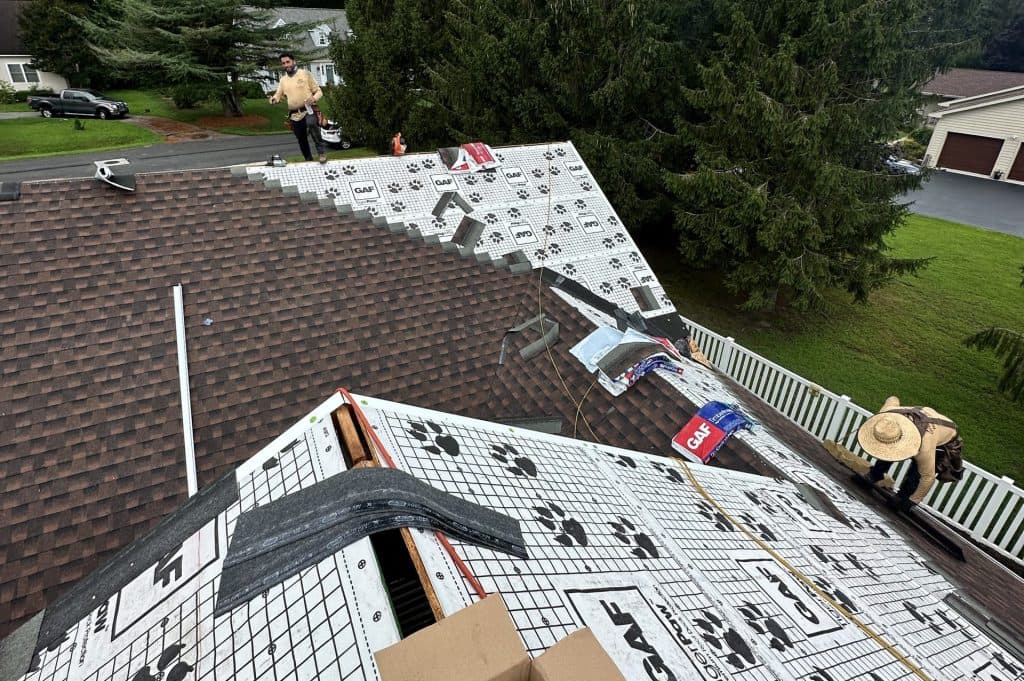
An emergency roof repair is any temporary fix performed to prevent further water intrusion, structural damage, or safety hazards after sudden damage exposes the interior of the home. Common triggers include storm torn shingles, fallen tree limbs, hail punctures, ice dam leaks, and wind lifted flashing that lets water flow directly into the attic or living space.
Why Does Response Time Matter So Much?
Response time matters because water damage compounds hour by hour, with mold beginning to grow within 24 to 48 hours of moisture exposure and drywall, insulation, and framing sustaining permanent damage in the same window. According to the Insurance Information Institute, about one in 36 insured homes files a property damage claim related to wind or hail each year, with the average claim paying out $14,747 in losses. Delayed emergency response often turns claim amounts far higher because water spreads through the ceiling, walls, and floors from a single roof breach. Insurance carriers also expect homeowners to take reasonable steps to prevent additional damage after a covered event, and failure to do so can reduce or void the claim entirely.
- Mold growth window: Mold typically forms within 24 to 48 hours of moisture exposure.
- Compounding damage: Water spreads through ceilings, walls, and floors from one roof breach.
- Claim protection: Insurance policies require reasonable steps to prevent further damage.
- Cost multiplication: A $500 emergency tarp often prevents $10,000 to $30,000 in interior damage.
6 Emergency Roof Repair Tips Every Homeowner Should Know
The six emergency roof repair tips below cover the most effective actions homeowners can take in the first hours after storm damage. Each tip balances damage prevention with personal safety, since many roof emergencies are best handled from inside the home rather than on the roof itself.
1. Prioritize Safety Before Any Repair Attempt
Prioritizing safety before any repair attempt is the single most important emergency roof repair rule. Wet shingles are extremely slippery, storm damaged decking may not support weight, and falling debris from partially detached shingles and branches poses serious injury risk. Falls from residential roofs cause hundreds of serious injuries and dozens of deaths every year, and most of those falls happen during exactly the kind of emergency conditions homeowners are trying to address. Stay off the roof entirely during and immediately after severe weather, and instead perform temporary damage control from inside the attic and around the perimeter of the home. If the damage is severe enough to require on roof work, call a professional emergency roofing contractor rather than climbing up yourself.
- Weather timing: Never work on a roof during active precipitation or high winds.
- Slip hazards: Wet shingles have almost no traction and cause most emergency falls.
- Structural risk: Storm damaged decking may not support a person’s weight.
- Professional escalation: Call an emergency contractor rather than attempting risky work yourself.
2. Contain Interior Water Damage First
Containing interior water damage first is the highest impact action a homeowner can take from inside the home. Place buckets, pots, or storage bins directly under active drips to catch water before it reaches flooring, and move furniture, electronics, and valuables out of the affected area to prevent secondary damage. If water is bubbling behind a ceiling paint layer, gently pierce the lowest point of the bubble with a screwdriver to release the water in a controlled way rather than letting it burst and spread. Lay towels along baseboards to absorb runoff and use a wet/dry vacuum to remove pooled water quickly. Every gallon of water removed within the first hour is a gallon that will not soak into subfloor or drywall.
- Bucket placement: Position containers directly under drips to catch water at the source.
- Furniture protection: Move electronics, upholstery, and valuables away from affected zones.
- Controlled release: Pierce ceiling bubbles at the lowest point to drain water safely.
- Water extraction: Use a wet/dry vacuum to remove standing water immediately.
3. Apply a Temporary Tarp Once It Is Safe
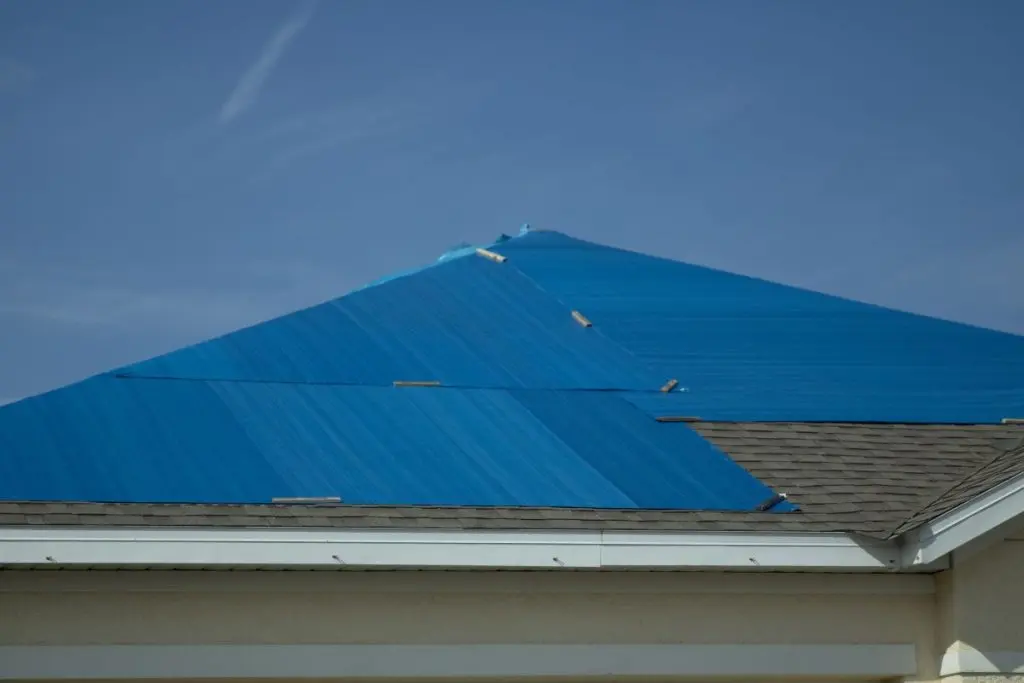
Applying a temporary tarp is the most effective outdoor emergency roof repair once weather has calmed and it is safe to work near the roof. Heavy duty poly tarps rated for outdoor use should extend at least 4 feet beyond the damaged area in every direction, with the top edge running over the ridge of the roof so water flows over rather than under the tarp. Secure the tarp with 2×4 boards wrapped around each edge, screwed through the tarp and into solid decking or rafters below. Nailing the tarp directly to the roof creates additional puncture points that will leak once the tarp is removed, so wrapped 2×4 anchoring is the professional standard. If the damaged area is too large or the roof pitch is too steep for safe tarping from a ladder, call an emergency contractor immediately.
- Tarp overlap: Cover damaged area with at least 4 feet of tarp extension in every direction.
- Ridge coverage: Run the top edge over the ridge so water flows over the tarp.
- 2×4 anchoring: Wrap tarp edges around 2×4 boards and screw through both into the deck.
- Puncture prevention: Avoid nailing directly through the tarp into undamaged roof areas.
4. Document Everything for Insurance
Documenting everything for insurance is a critical emergency roof repair step that homeowners often skip in the rush to stop water damage. Take dozens of photos and videos from multiple angles before any temporary repair work begins, capturing the full scope of exterior damage, interior water intrusion, and any damaged personal property. Include timestamps by photographing a newspaper or phone screen showing the date. Record the weather event details, including date, time, wind speeds, and any hail size observations, since insurance adjusters correlate this data with weather service records to verify claims. Keep all receipts for tarps, buckets, and emergency contractor services, since these expenses are typically reimbursable under most homeowner policies.
- Before photos: Capture damage before any temporary repairs begin.
- Multiple angles: Photograph exterior, interior, and personal property damage.
- Timestamp documentation: Include a dated newspaper or phone screen in photos.
- Receipt tracking: Save emergency purchase receipts for insurance reimbursement.
5. Clear Debris Only if Safe to Do So
Clearing debris only if safe to do so applies to fallen branches, blown insulation, and storm debris that may be worsening the damage. Small branches on the roof surface can be dragged off from a ladder without stepping onto the roof itself, while large limbs and trees resting against the structure require professional tree removal to prevent additional damage during removal. Never attempt to move debris that is providing temporary structural support to a damaged section of roof, since removing it prematurely can cause partial collapse. Debris in gutters should be cleared to restore drainage, but only from a ladder positioned on stable ground with a spotter present. If any doubt exists about whether debris removal is safe, wait for the emergency contractor to handle it as part of the full assessment.
- Small branch removal: Drag debris off from a ladder without stepping onto the roof.
- Large limb caution: Trees resting against the home require professional tree services.
- Structural support: Never remove debris that may be supporting a damaged roof section.
- Gutter drainage: Clear gutter debris to restore water flow away from the home.
6. Call a Certified Emergency Roofing Contractor Immediately
Calling a certified emergency roofing contractor immediately is the final and most important step in the emergency roof repair process. Reputable contractors like GAF Master Elite installers offer 24 hour emergency response for exactly this kind of situation and can typically arrive within 2 to 6 hours during storm events. An emergency contractor performs a professional tarp installation, assesses the full scope of damage, provides written documentation for insurance claims, and schedules the permanent repair once weather conditions allow. Avoid storm chasers who canvass neighborhoods after major weather events, since these operations often perform substandard work and disappear before warranty issues arise. Instead, call a local established contractor with verifiable credentials, physical office location, and strong online reviews.
- 24 hour response: Reputable local contractors typically arrive within 2 to 6 hours.
- Full assessment: Professionals identify hidden damage that homeowners often miss.
- Insurance documentation: Contractors provide the written reports adjusters require.
- Storm chaser avoidance: Skip door to door canvassers in favor of established local companies.
What Should You Avoid During an Emergency Roof Repair?
Several common mistakes during emergency roof repair make the situation worse or void insurance coverage. Understanding what to avoid is as important as knowing what to do.
What Are the Biggest Emergency Repair Mistakes?
Several specific mistakes turn manageable roof emergencies into expensive problems. Attempting extensive repairs during active weather is the biggest mistake and the most common cause of homeowner injuries during storm events. Signing contracts with door to door storm chasers before your regular contractor can respond is another major error, since these agreements often lock homeowners into inflated pricing or fraudulent claim assistance. Removing damaged materials before an insurance adjuster documents them can reduce claim payouts significantly, so preserve damaged shingles, wet insulation, and other materials for inspection. Finally, failing to notify the insurance carrier within the policy’s required timeframe (typically 30 to 60 days) can void the claim entirely regardless of how much damage occurred.
- Weather timing: Never attempt on roof work during active storms or immediately after.
- Storm chaser contracts: Avoid signing anything with door to door canvassers.
- Premature cleanup: Preserve damaged materials until an adjuster documents them.
- Notification deadlines: Contact your insurance carrier within policy required timeframes.
Frequently Asked Questions
How Much Does Emergency Roof Repair Cost?
Emergency roof repair typically costs $400 to $1,500 for temporary tarping and initial damage control in Delaware. Full permanent repairs vary widely based on damage extent, with minor storm damage running $500 to $3,000 and major damage requiring partial or full roof replacement at $8,000 to $30,000 or more.
Will Homeowners Insurance Cover Emergency Roof Repair?
Homeowners insurance typically covers emergency roof repair when the damage results from a covered peril like wind, hail, fallen trees, or similar sudden events. Most policies cover both the emergency tarping and the permanent repair, but do not cover damage from wear and tear, poor maintenance, or gradual leaks that predate the storm.
How Long Can a Roof Tarp Stay in Place?
A properly installed roof tarp can stay in place for 90 to 180 days safely, though 30 to 60 days is the recommended maximum before permanent repairs. UV exposure degrades the tarp material over time, and prolonged tarp use can lead to secondary damage from wind lifting or water pooling in low spots.
Can I Do Emergency Roof Repairs Myself?
Homeowners can safely handle interior water containment, documentation, and small debris cleanup from a ladder, but should not climb onto the roof for tarping or shingle repairs. On roof emergency work is best left to certified contractors with proper safety equipment and experience working on storm damaged surfaces.
Should I File an Insurance Claim for Every Emergency?
Filing an insurance claim makes sense when damage clearly exceeds your deductible and results from a covered peril. Minor damage under the deductible amount typically does not warrant a claim, since the claim itself can affect future premiums. A certified contractor can help assess whether damage justifies a claim before you file.
How Do I Find an Emergency Roofing Contractor Fast?
Finding an emergency roofing contractor fast starts with contacting the company that installed your roof or the contractor listed on your last maintenance visit. Local established companies with GAF Master Elite or similar certifications typically offer 24 hour emergency response, while online searches and local BBB listings provide backup options during major storm events.
Why Grand Exteriors Is the Right Choice for Your Emergency Roof Repair
Grand Exteriors brings the gold standard to every emergency roof repair across Middletown and surrounding areas, combining GAF Master Elite certification with 24 hour emergency response that gets crews on site quickly during storm events. As a family owned and operated company, we understand that emergency situations demand fast, honest work rather than the high pressure sales tactics that storm chasers rely on. From emergency repairs and full insurance claims assistance to flexible financing and ongoing maintenance program coverage, we handle the entire process from temporary tarp installation to permanent repair while providing the documentation your insurance carrier needs. If you have storm damage or a sudden roof leak that needs immediate attention, contact Grand Exteriors today for emergency roof repair and a free estimate on the permanent fix.