
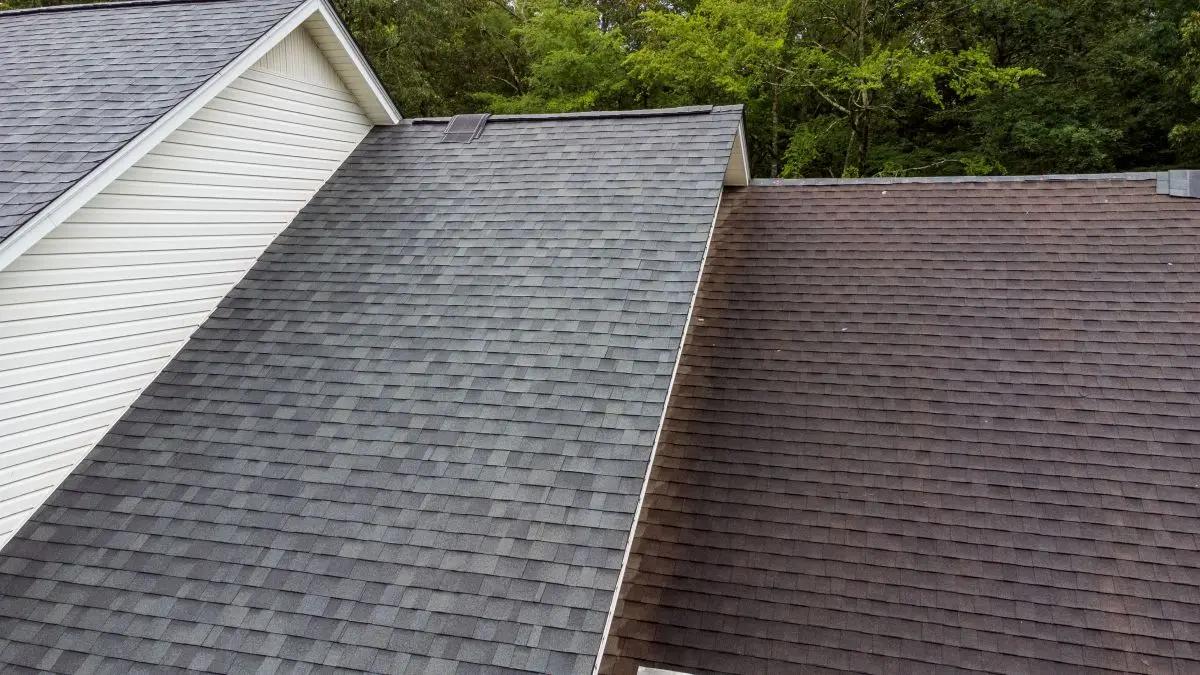
How Long Does A Roof Last For Homes in Delaware? (2026)
Asking yourself “how long does a roof last on a Delaware home” matters more than ever in 2026, as climate volatility, stronger storms, and updated building codes all reshape what homeowners can expect from their roofing systems. Coastal humidity, salt air, freeze thaw cycles, and the occasional nor’easter all compress roof lifespans compared to national averages, which means homeowners need Delaware specific guidance rather than generic numbers. This guide walks through real roof lifespans by material, the climate factors that shorten them, and the maintenance habits that help homeowners in Dover and surrounding areas reach the upper end of their roof’s design life.
- Material specific lifespans: Real numbers on how long asphalt, metal, slate, and tile roofs last in Delaware.
- Climate impact factors: How salt air, humidity, UV exposure, and storm activity affect Delaware roofs.
- Replacement warning signs: The visible indicators that your roof has reached the end of its service life.
How Long Does the Average Roof Last in Delaware?
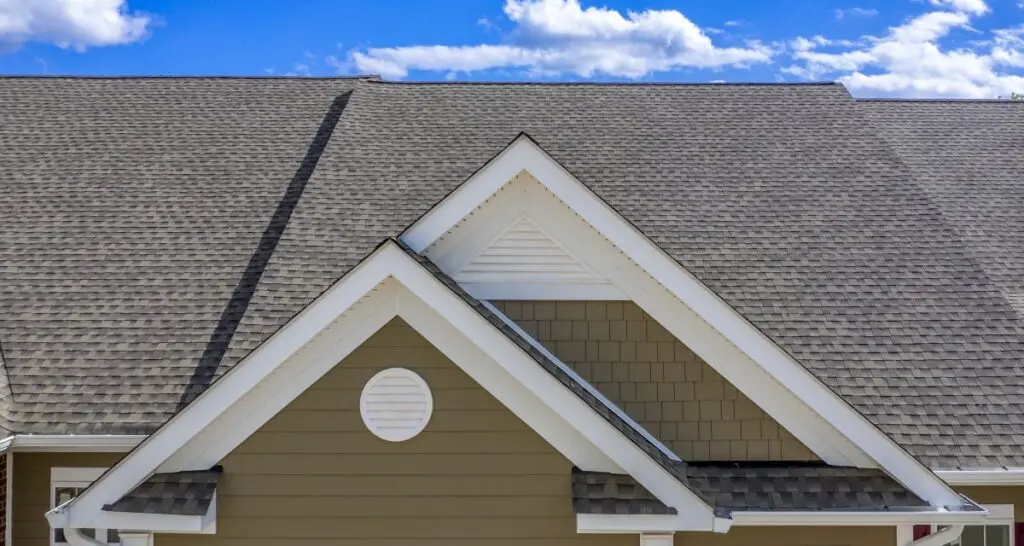
The average roof in Delaware lasts 20 to 30 years for asphalt shingle systems, which dominate roughly 80% of Delaware homes. Premium materials like metal, slate, and tile extend that range significantly, with some systems lasting 50 to 100 years or more when properly installed and maintained.
Why Does Delaware Climate Affect Roof Lifespan?
Delaware climate affects roof lifespan through four primary stressors: salt air, humidity, freeze thaw cycles, and storm exposure. Coastal homes within 5 miles of the Atlantic experience accelerated corrosion of metal flashing, faster algae growth on north facing slopes, and earlier granule loss from salt spray and humid summers. Inland homes in Dover and surrounding areas face less salt exposure but still deal with the freeze thaw cycles that crack older shingles each winter. According to the International Association of Certified Home Inspectors (InterNACHI), 3 tab asphalt shingles have a life expectancy of 20 years and architectural shingles 30 years, but these estimates assume average conditions that Delaware’s coastal climate routinely exceeds in severity.
- Salt air corrosion: Coastal homes face accelerated metal flashing and fastener wear.
- Humidity damage: High summer humidity feeds algae, mold, and mildew growth.
- Freeze thaw stress: Winter cycles crack aging shingles and break sealant bonds.
- Storm exposure: Nor’easters and hurricanes compress lifespans by years per event.
How Does Installation Quality Affect Lifespan?
Installation quality determines whether a roof reaches its design lifespan or fails years early. Industry data suggests roughly 40% of new roofs contain at least one installation defect that shortens lifespan, with nailing pattern errors, ventilation oversights, and flashing mistakes leading the list. A GAF Master Elite contractor follows manufacturer specifications precisely, which is why their installations consistently reach the upper end of expected service life. Skipping ice and water shield, using too few nails per shingle, or installing over an unrepaired deck all guarantee premature failure regardless of shingle quality. Homeowners in Dover and surrounding areas who want their roof to last the full 30 years should verify contractor credentials before signing.
- Nailing accuracy: Correct nail placement determines wind rating and warranty validity.
- Ventilation balance: Proper attic airflow extends shingle life by up to 25%.
- Flashing precision: Quality flashing prevents the leaks that drive premature replacement.
- Underlayment quality: Modern synthetic underlayment outlasts older felt by decades.
4 Lifespans of Roofing Materials in 2026
The roofing materials below cover roughly 95% of residential installations across Delaware, ranked by popularity. Each entry includes the expected lifespan in Delaware specifically, which accounts for coastal humidity and storm exposure.
1. 3 Tab Asphalt Shingles Last 15 to 20 Years
3 tab asphalt shingles last 15 to 20 years on average in Delaware, with coastal exposure often pulling that range down to 12 to 18 years. These single layer shingles weigh 200 to 250 pounds per square and carry wind ratings of only 60 to 70 mph, which is below the threshold many coastal Delaware homes need during nor’easter season. They remain the most affordable asphalt option at $3 to $5 per square foot installed, but most quality contractors recommend stepping up to architectural shingles for any primary residence. Manufacturer warranties on 3 tab products typically run 20 to 25 years, though real world lifespan rarely reaches the warranty maximum in coastal climates.
- Delaware lifespan: 15 to 20 years inland, 12 to 18 years near the coast.
- Wind rating: 60 to 70 mph, below what many coastal exposures demand.
- Cost range: $3 to $5 per square foot installed.
- Best use: Budget rentals, sheds, and short term ownership situations.
2. Architectural Asphalt Shingles Last 25 to 30 Years
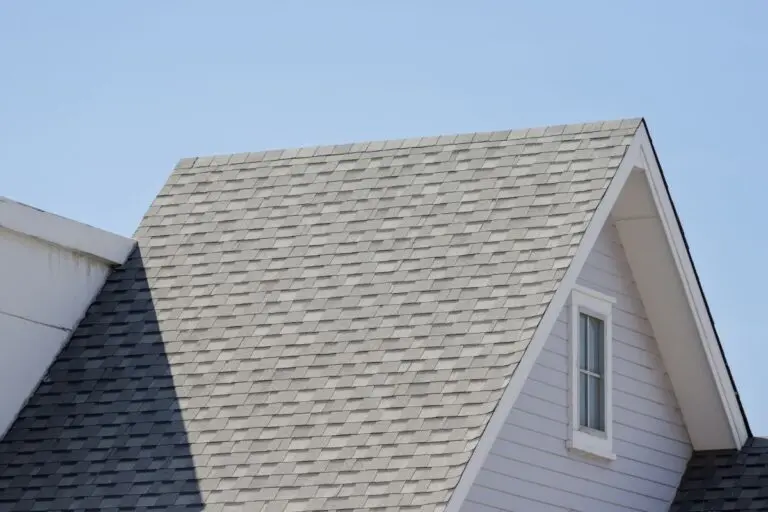
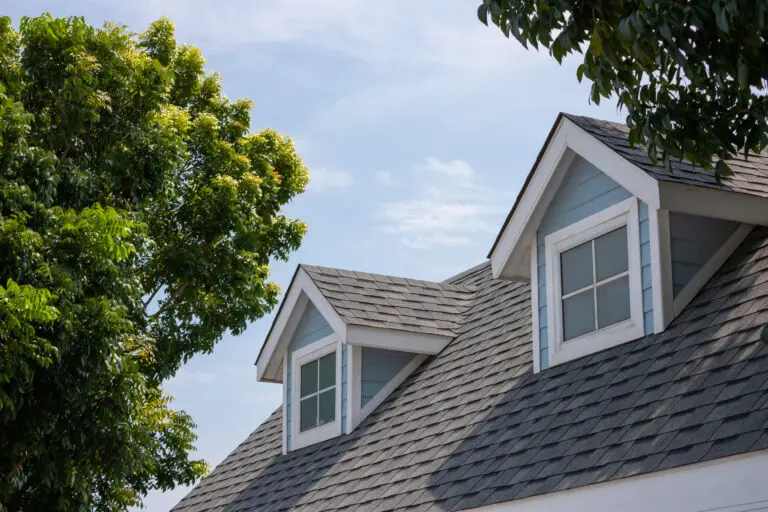
Architectural asphalt shingles last 25 to 30 years in most Delaware locations and are the standard recommendation for primary residences. Their multi layer laminate construction weighs 400 plus pounds per square and creates the textured, shadowed appearance that mimics wood shake or slate. Wind ratings reach 130 mph on premium GAF, CertainTeed, and Owens Corning lines, which handles even severe coastal storm exposure. Cost typically runs $4 to $7 per square foot installed, and manufacturer warranties often extend 30 to 50 years with certified installation. Homes in Dover and surrounding areas with architectural shingles consistently outperform 3 tab installations by a full decade.
- Delaware lifespan: 25 to 30 years with proper installation and ventilation.
- Wind rating: Up to 130 mph on premium architectural lines.
- Cost range: $4 to $7 per square foot installed.
- Best use: Primary residences and long term ownership in mixed climates.
3. Metal Roofs Last 40 to 70 Years
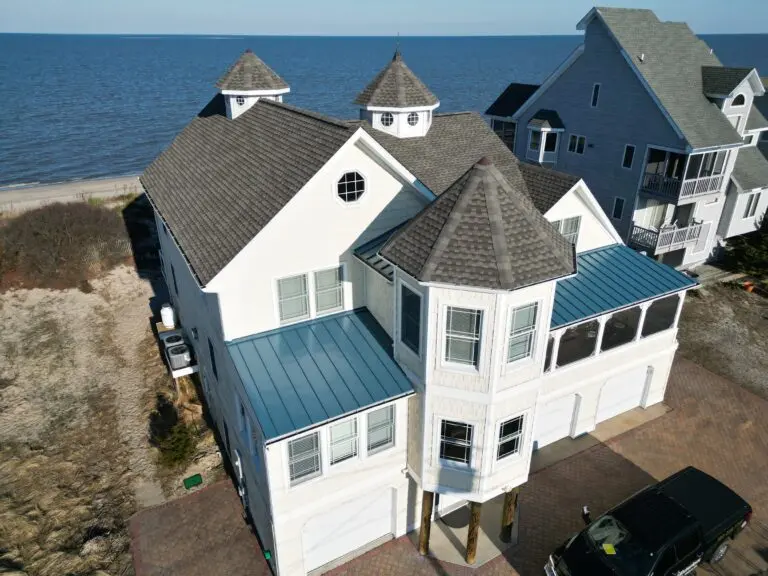
Metal roofs last 40 to 70 years in Delaware depending on the metal type and coastal proximity. Standing seam aluminum and zinc systems handle salt air best and consistently reach the upper end of that range, while painted steel can show rust within 20 years at coastal exposures. Copper roofs routinely exceed 100 years and develop the prized green patina that makes them a premium aesthetic choice. Cost runs $9 to $16 per square foot installed depending on metal type and panel profile, with wind ratings typically 140 to 160 mph. Metal also reflects solar heat to cut summer cooling costs by up to 25%, which makes it increasingly popular among Delaware homeowners focused on long term value.
- Delaware lifespan: 40 to 70 years for steel, 50 to 100 plus for aluminum and copper.
- Wind rating: 140 to 160 mph on most standing seam systems.
- Cost range: $9 to $16 per square foot installed.
- Best use: Long term homeowners and properties in high wind or fire prone zones.
4. Slate Roofs Last 75 to 150 Years
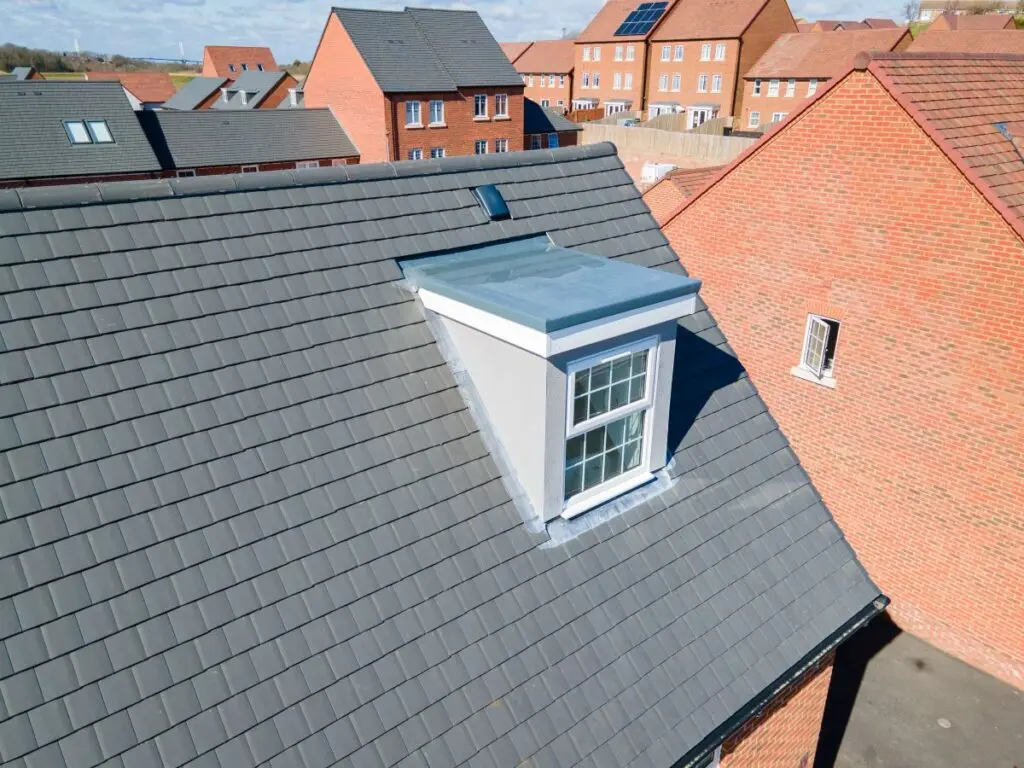
Slate roofs offer the longest service life of any common roofing material, lasting 75 to 150 years on properly framed Delaware homes. Natural quarried slate is essentially immune to UV degradation, fire, insects, and mold, which is why it remains the gold standard for historic preservation work across the Mid Atlantic. The trade offs are weight (slate requires reinforced framing) and cost, with installed pricing typically $15 to $30 per square foot for natural slate and $9 to $14 for synthetic alternatives from DaVinci Roofscapes and EcoStar. Synthetic slate lasts 40 to 50 years and offers most of the aesthetic benefits at a fraction of the weight, making it popular for retrofits where structural reinforcement is not feasible.
- Delaware lifespan: 75 to 150 years for natural slate, 40 to 50 for synthetic.
- Fire rating: Class A, the highest available.
- Cost range: $15 to $30 per square foot for natural, $9 to $14 for synthetic.
- Best use: Historic homes, custom builds, and forever home investments.
5. Clay and Concrete Tile Roofs Last 50 to 100 Years
Clay and concrete tile roofs deliver exceptional longevity at 50 to 100 years, though they remain less common in Delaware than in warmer Sun Belt states. Clay tiles are kiln fired ceramic that handle heat and UV exceptionally well, while concrete tiles offer similar performance at lower cost. Both materials are heavy at 600 to 1,100 pounds per square, so most Delaware homes need engineered framing to support a tile installation. Cost runs $10 to $20 per square foot for clay and $8 to $15 for concrete, with strong wind ratings up to 150 mph when properly fastened. Tile is most often chosen for Mediterranean, Spanish Colonial, and Mission style homes where the aesthetic justifies the structural investment.
- Delaware lifespan: 50 to 100 years for clay, 40 to 75 years for concrete.
- Weight: 600 to 1,100 pounds per square requires engineered framing.
- Cost range: $10 to $20 for clay, $8 to $15 for concrete.
- Best use: Mediterranean, Spanish Colonial, and Mission style architecture.
What Factors Shorten Roof Lifespan in Delaware?
Several Delaware specific factors compress roof lifespan below the national averages. Understanding each helps homeowners take preventive steps that add years back to their roof’s expected service life.
How Does Poor Ventilation Shorten Roof Life?
Poor attic ventilation can cut shingle lifespan by 25% or more by trapping heat that bakes shingles from below and moisture that rots the decking from beneath. A properly ventilated attic maintains temperatures within 10 to 15 degrees of the outdoor reading in summer, while a poorly ventilated attic can reach 150 degrees or more. That heat accelerates the loss of volatile oils in asphalt shingles, leading to brittleness, cracking, and granule loss years earlier than expected. Balanced ventilation requires both intake vents at the soffits and exhaust vents at the ridge, with neither restricted by insulation, paint, or debris.
- Soffit intake: Air must flow freely without insulation blocking the openings.
- Ridge exhaust: Continuous slot vent pulls hot air out of the attic peak.
- Temperature differential: Attic should stay within 10 to 15 degrees of outdoor temp.
- Lifespan impact: Poor ventilation cuts shingle life by 25% or more.
How Do Trees and Debris Affect Roof Lifespan?
Trees and debris are the most controllable lifespan threats in Delaware, with overhanging branches causing more damage than most homeowners realize. Branches that scrape against shingles in high wind strip granules faster than UV alone, while fallen limbs during storms can cause $5,000 to $15,000 in immediate damage. Leaves and pine needles that accumulate on the roof or in gutters hold moisture against the shingles and feed the algae and moss growth that shortens lifespan significantly. Trimming branches back at least 10 feet from the roof surface and cleaning gutters twice per year prevents the majority of tree related damage.
- Branch clearance: Trim trees at least 10 feet back from the roof surface.
- Gutter cleaning: Clear leaves and debris twice per year in spring and fall.
- Moss prevention: Remove organic debris that holds moisture against shingles.
- Storm preparation: Inspect and trim weak limbs before nor’easter season.
Frequently Asked Questions
How Often Should a Delaware Roof Be Replaced?
Most Delaware roofs need replacement every 20 to 30 years for architectural asphalt shingles, with coastal homes typically falling toward the lower end of that range. Premium materials like metal, slate, and tile can last 50 to 150 years and may never need replacement during one homeowner’s tenure.
What Are the Signs My Roof Needs Replacement?
The most common signs of needing roof replacement include curling or cupping shingles, missing shingles after storms, granule buildup in gutters, dark streaking from algae, and visible sagging along the ridge or eave lines. Interior signs include water stains on ceilings, daylight visible through the attic deck, and ice dam damage during winter.
Can I Extend My Roof’s Lifespan With Maintenance?
Yes, regular maintenance can extend roof lifespan by 5 to 10 years through twice yearly inspections, gutter cleaning, prompt repair of minor damage, and removal of moss and algae growth. A maintenance program from a certified contractor typically pays for itself many times over by deferring the cost of full replacement.
Does Roof Color Affect How Long It Lasts?
Roof color affects shingle lifespan modestly, with darker shingles absorbing more heat and experiencing slightly more thermal cycling than lighter colors. The lifespan difference is typically 1 to 3 years, which makes color a smaller factor than ventilation, installation quality, or storm exposure.
Should I Repair or Replace My Aging Roof?
Repair makes sense for isolated damage on a roof with at least 5 years of remaining life, while replacement makes sense when the roof is approaching its expected lifespan or when repairs would cost more than 30% of replacement value. A certified contractor can provide an honest assessment after a thorough inspection.
Will Homeowner Insurance Cover an Aging Roof?
Homeowner insurance typically covers roof replacement when damage results from a covered peril like wind, hail, or fallen trees, but does not cover age related wear or poor maintenance. Roofs over 20 years old may face reduced coverage or require an inspection before policy renewal.
Why Grand Exteriors Is the Right Choice for Your Next Roof in Delaware
Grand Exteriors brings the gold standard to every roof installation across Dover and surrounding areas, combining GAF Master Elite certification with the kind of attention to detail that pushes asphalt shingle roofs to their full 30 year design life. As a family owned and operated company, we treat every home like it belongs to a neighbor, which means we install for longevity rather than speed.
From emergency repairs and full insurance claims assistance to flexible financing and ongoing maintenance program coverage, we make sure Delaware homeowners get more than just a new roof. They get a roof that actually lasts as long as the warranty says it should. If you are wondering how long does a roof last on your specific home, or if your existing roof is showing signs of age, contact Grand Exteriors today for a free estimate and an honest assessment of your roof’s remaining lifespan.